
Why We're the Right Partner for Manufacturers with Heterogeneous Machine Parks
Integrate Modern and Legacy Machines into One Digital Environment – Without Replacing Your Entire Machine Park
In many manufacturing companies, the machine park has grown over years or even decades. Alongside modern injection molding machines with current interfaces, there are often older systems that still produce reliably and are not economically viable to replace.
This exact mix presents many companies with a challenge:
How can machines of different generations be connected in a common digital production environment?
The good news: You don't have to replace your entire machine park to do it.
The Reality in Many Production Facilities
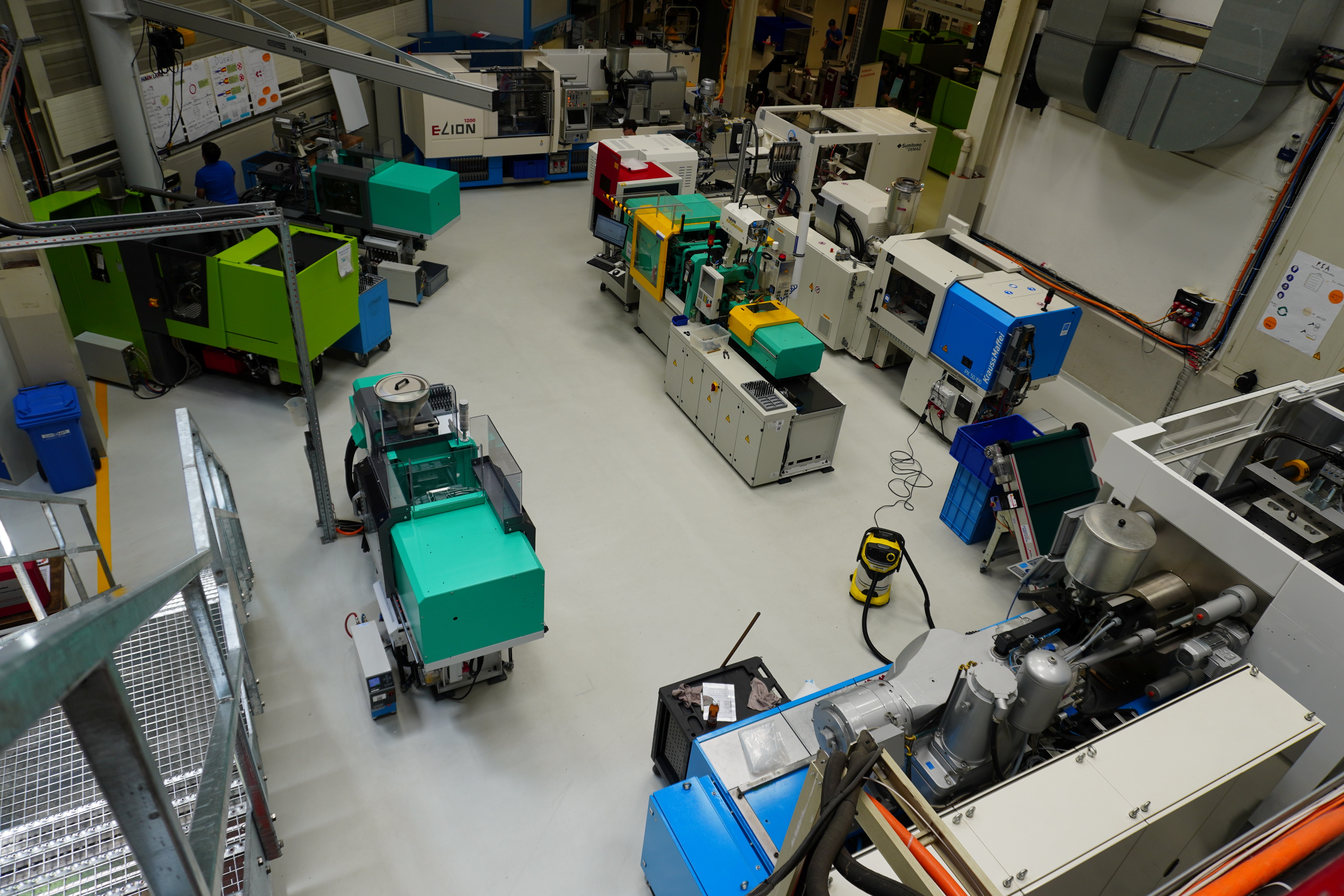
Hardly any company starts from scratch.
Production environments much more often look like this:
- modern machines with OPC UA or Euromap interfaces
- older systems without digital communication
- various manufacturers
- different model years and software versions
- existing ERP or data acquisition systems
Many managers therefore believe that digitalization is only possible once all machines have been replaced.
We encounter this assumption time and again in our projects – but it is incorrect.
Digitalization does not mean replacing machines
A successful start to digital production does not necessarily begin with new machines.
It begins with using your existing infrastructure intelligently.
While modern machines can often provide their data directly via standardized interfaces, older equipment simply requires a suitable way to capture relevant production signals.
This is exactly where we at bfa come in.
Different machines – a common data basis
Our goal is not to make every machine technically identical.
Our goal is to make all relevant production information available on a single, shared platform.
Depending on the machine type, different connection options are used.
Modern machines
New machines often already feature interfaces such as:
- OPC UA
- Euromap 77
- other manufacturer protocols
These can be connected directly to the Manufacturing Execution System.
Older machines
Even older equipment can provide valuable production data.
Using so-called PiGateways , existing electrical signals—such as machine status or machine cycles via positive locking—are captured and converted into digital information. This enables reliable performance monitoring even for older machines, without needing to intervene deeply in the control system or replace the machine entirely.
The result:
Even older machines provide the most important information for production monitoring:
- Machine status
- Production counts
- Operating times
- OEE-relevant KPIs
Existing systems remain intact
Another important point:
Many companies already have ERP systems or their own data collection solutions in place.
These investments should not be lost.
That is why we do not pursue an "all-or-nothing" approach.
Our gateways and interfaces can provide production data in a way that allows existing systems to remain in use. The PiGateway serves as a central data hub between machines and your existing IT landscape.
This allows you to implement digitalization steps without having to rebuild your entire software landscape.
Digitalization step by step
Especially with heterogeneous machine fleets, it makes sense not to convert the entire production at once.
That is why many projects begin with a pilot phase.
In this phase, individual machines or a single production line are connected first.
This offers several advantages:
- Verify technical feasibility
- Involve employees early on
- Optimize processes
- Make benefits measurable
- Minimize risks
Only once the added value is visible is the solution gradually rolled out to further machines or locations. This approach reduces complexity and builds trust among management, IT, and production teams.
Why bfa solutions is the right partner
Digitalizing a heterogeneous machine park requires more than just software.
It demands experience in the following areas:
- Machine connectivity for various manufacturers
- Production processes
- Data integration
- Network technology
- MES
- Change management
We bring exactly this combination to the table.
We don't just look at individual machines, but at the entire production process – and we work with our customers to develop solutions that fit their existing infrastructure.
Because digitalization doesn't mean replacing what already works.
It means identifying existing potential and making better use of it, step by step.
